
In the ruthless landscapes of modern sector– where temperatures rise like a rocket’s plume, pressures crush like the deep sea, and chemicals wear away with relentless force– products should be more than resilient. They require to prosper. Enter Recrystallised Silicon Carbide Ceramics, a marvel of engineering that transforms severe problems right into opportunities. Unlike average porcelains, this product is born from an unique process that crafts it right into a latticework of near-perfect crystals, endowing it with stamina that equals steels and durability that outlasts them. From the intense heart of spacecraft to the sterilized cleanrooms of chip factories, Recrystallised Silicon Carbide Ceramics is the unsung hero making it possible for technologies that press the boundaries of what’s possible. This post studies its atomic keys, the art of its creation, and the bold frontiers it’s overcoming today.
The Atomic Plan of Recrystallised Silicon Carbide Ceramics
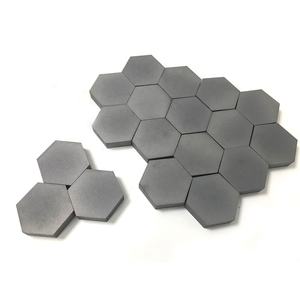
(Recrystallised Silicon Carbide Ceramics)
To understand why Recrystallised Silicon Carbide Ceramics stands apart, visualize building a wall surface not with bricks, yet with microscopic crystals that lock together like challenge pieces. At its core, this material is made of silicon and carbon atoms organized in a duplicating tetrahedral pattern– each silicon atom bound firmly to four carbon atoms, and vice versa. This structure, similar to diamond’s however with rotating elements, produces bonds so solid they withstand recovering cost under immense stress. What makes Recrystallised Silicon Carbide Ceramics unique is just how these atoms are organized: during manufacturing, tiny silicon carbide fragments are warmed to extreme temperature levels, triggering them to dissolve a little and recrystallize right into larger, interlocked grains. This “recrystallization” procedure eliminates powerlessness, leaving a product with an attire, defect-free microstructure that behaves like a solitary, giant crystal.
This atomic consistency gives Recrystallised Silicon Carbide Ceramics 3 superpowers. First, its melting factor surpasses 2700 levels Celsius, making it one of the most heat-resistant materials recognized– ideal for settings where steel would certainly vaporize. Second, it’s unbelievably strong yet lightweight; a piece the size of a block considers less than half as high as steel yet can birth loads that would crush aluminum. Third, it brushes off chemical attacks: acids, alkalis, and molten steels move off its surface without leaving a mark, many thanks to its steady atomic bonds. Think about it as a ceramic knight in radiating armor, armored not simply with firmness, yet with atomic-level unity.
Yet the magic doesn’t quit there. Recrystallised Silicon Carbide Ceramics additionally conducts warm remarkably well– practically as effectively as copper– while continuing to be an electrical insulator. This unusual combination makes it invaluable in electronics, where it can whisk warmth away from sensitive parts without running the risk of brief circuits. Its reduced thermal expansion implies it barely swells when warmed, preventing fractures in applications with fast temperature swings. All these qualities originate from that recrystallized framework, a testimony to how atomic order can redefine worldly possibility.
From Powder to Efficiency Crafting Recrystallised Silicon Carbide Ceramics
Developing Recrystallised Silicon Carbide Ceramics is a dance of accuracy and persistence, transforming simple powder into a product that defies extremes. The trip begins with high-purity basic materials: great silicon carbide powder, usually combined with small amounts of sintering help like boron or carbon to aid the crystals grow. These powders are initial shaped right into a harsh kind– like a block or tube– utilizing approaches like slip spreading (pouring a liquid slurry right into a mold and mildew) or extrusion (forcing the powder via a die). This preliminary form is simply a skeletal system; the genuine makeover takes place following.
The essential action is recrystallization, a high-temperature routine that improves the product at the atomic level. The designed powder is placed in a heater and heated to temperatures in between 2200 and 2400 levels Celsius– warm sufficient to soften the silicon carbide without thawing it. At this phase, the tiny particles begin to liquify a little at their sides, allowing atoms to migrate and reorganize. Over hours (or even days), these atoms find their suitable settings, merging into bigger, interlacing crystals. The outcome? A dense, monolithic framework where previous fragment borders disappear, changed by a seamless network of strength.
Regulating this procedure is an art. Insufficient warm, and the crystals don’t expand large sufficient, leaving weak points. Too much, and the material might warp or create fractures. Experienced professionals keep an eye on temperature contours like a conductor leading an orchestra, changing gas flows and home heating rates to assist the recrystallization completely. After cooling, the ceramic is machined to its last measurements utilizing diamond-tipped tools– considering that also set steel would certainly battle to cut it. Every cut is slow and intentional, preserving the material’s integrity. The final product belongs that looks easy however holds the memory of a journey from powder to excellence.
Quality assurance guarantees no imperfections slip via. Engineers examination samples for density (to validate full recrystallization), flexural strength (to determine flexing resistance), and thermal shock tolerance (by diving warm pieces right into cold water). Just those that pass these trials make the title of Recrystallised Silicon Carbide Ceramics, ready to deal with the world’s hardest jobs.
Where Recrystallised Silicon Carbide Ceramics Conquer Harsh Realms
The true test of Recrystallised Silicon Carbide Ceramics hinges on its applications– locations where failing is not a choice. In aerospace, it’s the backbone of rocket nozzles and thermal defense systems. When a rocket blasts off, its nozzle endures temperature levels hotter than the sunlight’s surface and pressures that squeeze like a huge hand. Steels would certainly thaw or deform, but Recrystallised Silicon Carbide Ceramics remains stiff, directing drive effectively while withstanding ablation (the gradual erosion from warm gases). Some spacecraft even utilize it for nose cones, securing delicate instruments from reentry warmth.
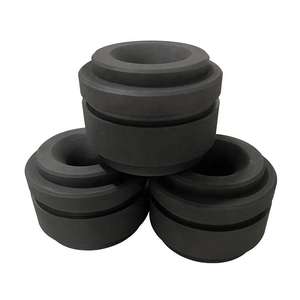
( Recrystallised Silicon Carbide Ceramics)
Semiconductor production is another sector where Recrystallised Silicon Carbide Ceramics radiates. To make integrated circuits, silicon wafers are heated in furnaces to over 1000 degrees Celsius for hours. Typical ceramic service providers might infect the wafers with impurities, but Recrystallised Silicon Carbide Ceramics is chemically pure and non-reactive. Its high thermal conductivity likewise spreads out heat uniformly, stopping hotspots that might ruin fragile wiring. For chipmakers going after smaller, faster transistors, this product is a silent guardian of purity and accuracy.
In the power field, Recrystallised Silicon Carbide Ceramics is changing solar and nuclear power. Solar panel makers use it to make crucibles that hold liquified silicon throughout ingot production– its heat resistance and chemical security prevent contamination of the silicon, enhancing panel performance. In nuclear reactors, it lines parts revealed to contaminated coolant, withstanding radiation damage that compromises steel. Also in blend research study, where plasma reaches countless levels, Recrystallised Silicon Carbide Ceramics is examined as a possible first-wall product, entrusted with having the star-like fire safely.
Metallurgy and glassmaking likewise rely on its toughness. In steel mills, it forms saggers– containers that hold liquified steel throughout warm treatment– standing up to both the steel’s warmth and its corrosive slag. Glass producers utilize it for stirrers and mold and mildews, as it will not react with molten glass or leave marks on ended up items. In each situation, Recrystallised Silicon Carbide Ceramics isn’t just a component; it’s a companion that allows processes once assumed also extreme for porcelains.
Introducing Tomorrow with Recrystallised Silicon Carbide Ceramics
As technology races onward, Recrystallised Silicon Carbide Ceramics is progressing too, discovering new roles in emerging fields. One frontier is electrical automobiles, where battery packs produce extreme warmth. Designers are testing it as a warm spreader in battery modules, drawing warmth away from cells to avoid getting too hot and prolong variety. Its light weight also aids maintain EVs reliable, a crucial factor in the race to change gas autos.
Nanotechnology is one more location of development. By blending Recrystallised Silicon Carbide Ceramics powder with nanoscale ingredients, scientists are creating composites that are both more powerful and more flexible. Think of a ceramic that flexes slightly without damaging– valuable for wearable tech or versatile solar panels. Early experiments show guarantee, meaning a future where this product adapts to new shapes and stresses.
3D printing is also opening up doors. While conventional methods restrict Recrystallised Silicon Carbide Ceramics to simple shapes, additive manufacturing allows complicated geometries– like latticework frameworks for light-weight warm exchangers or customized nozzles for specialized commercial processes. Though still in advancement, 3D-printed Recrystallised Silicon Carbide Ceramics could quickly enable bespoke elements for particular niche applications, from medical tools to area probes.
Sustainability is driving advancement too. Manufacturers are checking out methods to lower power use in the recrystallization process, such as making use of microwave home heating as opposed to standard furnaces. Recycling programs are likewise arising, recovering silicon carbide from old parts to make brand-new ones. As industries prioritize environment-friendly methods, Recrystallised Silicon Carbide Ceramics is verifying it can be both high-performance and eco-conscious.
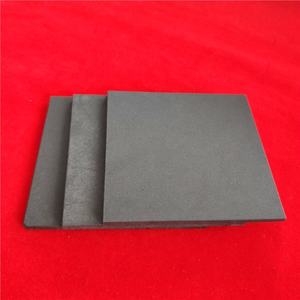
( Recrystallised Silicon Carbide Ceramics)
In the grand story of products, Recrystallised Silicon Carbide Ceramics is a chapter of resilience and reinvention. Birthed from atomic order, shaped by human resourcefulness, and examined in the harshest edges of the world, it has actually come to be vital to markets that dare to dream large. From introducing rockets to powering chips, from taming solar energy to cooling batteries, this material does not simply endure extremes– it grows in them. For any kind of firm aiming to lead in advanced production, understanding and using Recrystallised Silicon Carbide Ceramics is not just a selection; it’s a ticket to the future of efficiency.
TRUNNANO chief executive officer Roger Luo stated:” Recrystallised Silicon Carbide Ceramics masters severe sectors today, solving extreme obstacles, broadening into future technology technologies.”
Distributor
RBOSCHCO is a trusted global chemical material supplier & manufacturer with over 12 years experience in providing super high-quality chemicals and Nanomaterials. The company export to many countries, such as USA, Canada, Europe, UAE, South Africa, Tanzania, Kenya, Egypt, Nigeria, Cameroon, Uganda, Turkey, Mexico, Azerbaijan, Belgium, Cyprus, Czech Republic, Brazil, Chile, Argentina, Dubai, Japan, Korea, Vietnam, Thailand, Malaysia, Indonesia, Australia,Germany, France, Italy, Portugal etc. As a leading nanotechnology development manufacturer, RBOSCHCO dominates the market. Our professional work team provides perfect solutions to help improve the efficiency of various industries, create value, and easily cope with various challenges. If you are looking for alumina aluminum, please feel free to contact us and send an inquiry.
Tags: Recrystallised Silicon Carbide , RSiC, silicon carbide, Silicon Carbide Ceramics
All articles and pictures are from the Internet. If there are any copyright issues, please contact us in time to delete.
Inquiry us